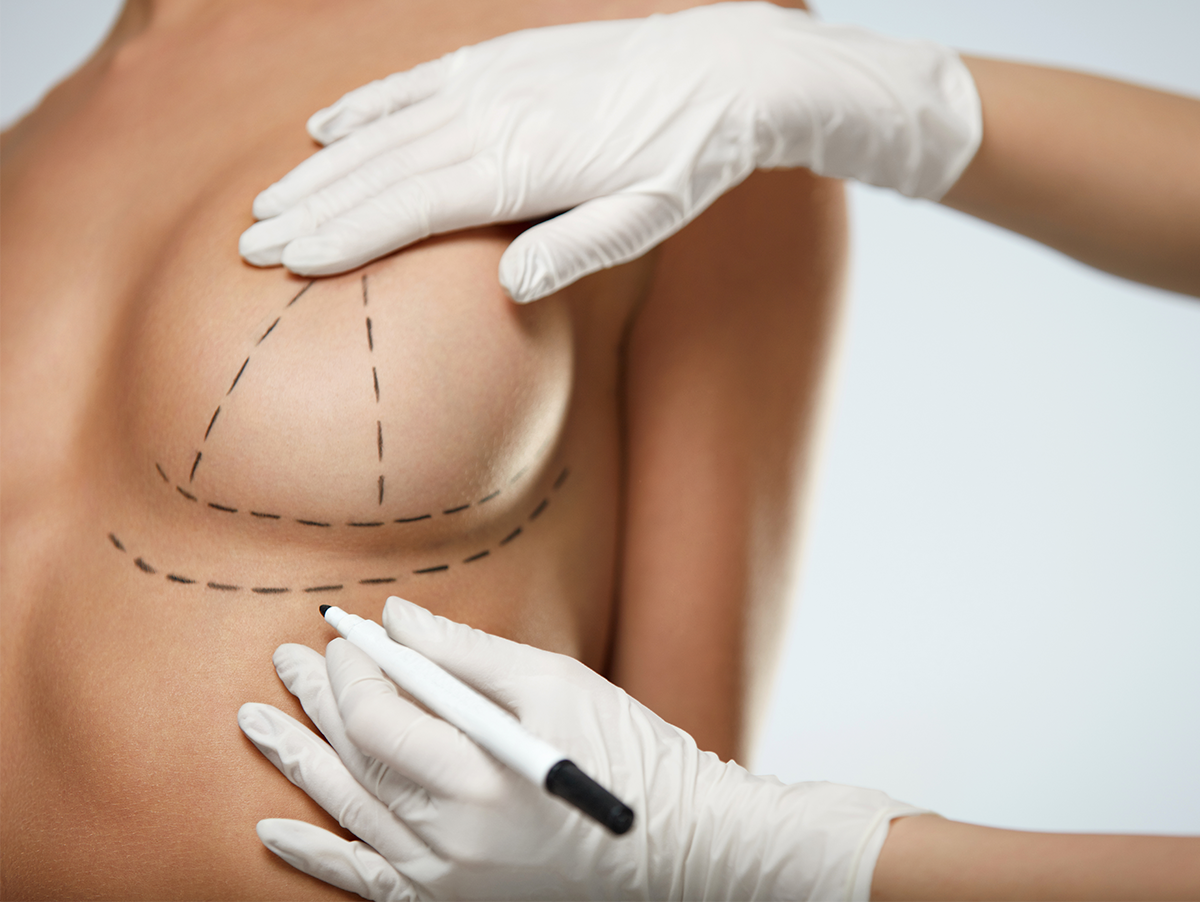
Breast lift, also called mastopexy, is a surgical procedure in which the surgeon removes excess skin and reshapes and lifts breast tissue. In principle, it is similar to breast reduction surgery.
In breast lift surgery, the focus is on the sagging skin tissue. The surgeon uses a special drawing to remove excess skin or a small amount of tissue from the area. Saggy nipples and breast tissue are improved to obtain steeper and fuller breasts. Breast lift is applied when the nipple is in line with the fold under the breast and there is no excess breast tissue.
Why is Breast Lift Performed?
The shape of the breasts changes with age. They usually lose their firmness over time. Since the skin cannot renew itself after it starts to deteriorate, flexibility decreases. There are many causes of such deformities:
Pregnancy: During this period, there may be tension in the tissues supporting the breasts in women. This signals that the breasts have become fuller and heavier. Saggy breasts can be seen after pregnancy. In addition, the same problem can arise when the baby is not breastfed.
Weight fluctuation: Sudden changes in the patient's weight may stretch the skin in the chest area. It can also make the area less elastic.
Gravity: Gravity stretches and loosens breast tissues over time, that is, as you age.
Breast lift reduces sagging and elevates nipple position. Surgery can also remove the dark area around the areola. However, the size of the nipple can be reduced in proportion to the newly formed breast.
How is Breast Lift Surgery Performed?
Breast sagging is classified in various ways. Sagging usually means that the nipples are below the level of the underbust line. If it is on or near the under-breast line, it is called mild (first-degree) sagging. In this case, the crescent-like skin on the areola can be removed and the nipple ring can be pulled a little higher.
If the nipple is approximately 3 cm below the under-breast line, there is moderate sagging. In this case, a large piece of skin is taken from the circumference of the breast ring, then the ring is sewn to the smaller diameter breast ring. In this case, only the scar around the nipple ring remains, and it may appear shrunken like a bag for several months.
If the nipple is less than 3 cm below the inframammary fold, there is a severe (3rd-degree) deviation. In this case, vertical mastopexy is performed using the reverse T method. A horizontal scar may form under the chest. However, the advantage of this method is that the breast can take the ideal shape.
Besides that, there is a special condition called "pseudoptosis". In this case, the breasts appear drooping because the distance between the nipple ring and the under-breast line is shorter than normal, although the breasts are not actually drooping. To correct this, breast augmentation can be performed using silicone prostheses.
Period After Breast Lift Surgery
After the operation, the nipples rise and return to their original position. That is: The patient is forward and slightly upwards while standing. At the end of the operation, a vertical scar is formed around the areola, going down from this ring in the front, and a horizontal line under the breast (reverse T method).
While these scars are pink for the first 6 months, they gradually turn white and then almost disappear. In a few years, however, it becomes even more obscure. In rare cases, a second surgery may be required if the scars remain very prominent.
The surgeon decides which procedure to use for the patient based on the breast tissue to be removed, sagging, and other factors. The surgery is performed under general anesthesia. The new positions and diameters of the nipples and rings are calculated taking into account the patient's body measurements and drawings are made accordingly. Excess skin is removed from the appropriate areas.
The nipple is pulled to where it should be, that is, higher. In the meantime, the connection between the nipple and the milk duct can be cut very slightly. Infection and bleeding are among the important complications that may occur after surgery.