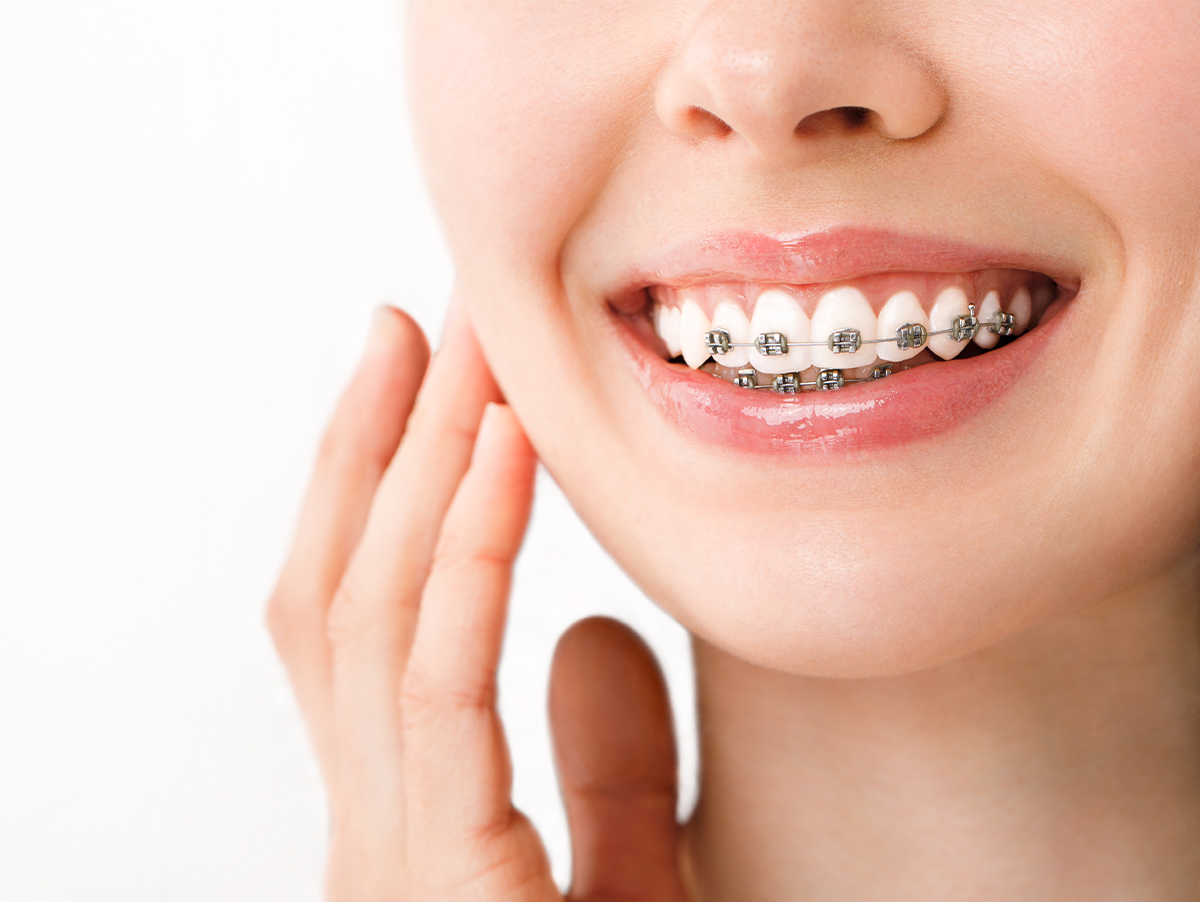
Orthodontic dentistry is a branch of science that deals with the diagnosis, treatment and care of irregularities in the teeth and face, defined as malocclusion, which helps to solve not only aesthetic problems but also various medical problems.
It is a specialty that deals with the treatment of disorders caused by the lower or upper jaw forward or backward, by eliminating the crowding caused by narrow jaw structures or teeth larger than the jaw. Orthodontics is the field of dentistry that deals with the treatment of structural disorders, tooth cavities, mouth closure defects and crooked teeth in the lower and upper jaws.
Orthodontics, which consists of the words "ortho", means healing in Latin, and "donti", which corresponds to the expressions of tooth and dental tissue, are applications that take into account the age of the patient and treat problems related to teeth and jaws with a personalized approach. Untreated crooked teeth are difficult to clean, which can cause tooth loss and gum problems.
In addition, the positions of the mandible and maxilla, being anterior or posterior to the skull, cause excessive pressure on the jaw muscles. This can lead to temporomandibular disorders and head, shoulder and back pain. With orthodontic treatments, all these problems can be prevented before they occur, and as a result, a more aesthetic appearance is achieved.
Orthodontics Treatment
Advances in medicine and technology have made orthodontic treatment faster and more aesthetic. The treatments used to move the teeth and to improve the muscle or jaw structure can be removable or fixed. When it comes to choose, treatment methods that apply very little force to the tooth and jaw depend on what orthodontic problems are. Clear aligners, chin braces and traditional braces are among the main options.
Orthodontics Treatment: Discomforts
Orthodontics diagnoses and treats diseases that affect appearance due to the alignment of the teeth and the shape of the jaw. Dental problems are mostly crowding in the teeth due to the narrow jaw structure or teeth larger than the jaw, but diastema can also be seen among these problems.
Permanent tooth loss due to asymmetric position or premature loss of milk teeth are some of the diseases that concern the orthodontic department. Skeletal disorders, that is, problems in the jaw structure are also diseases treated with this branch.
Some of the conditions treated by the field of orthodontics are listed below.
- Crowded teeth: It is a condition that develops due to the imbalances in the teeth and jaw structure. It is classified as mild, moderate and severe crowding. Depending on the condition of the discomfort, individual treatment is applied.
- Gap teeth: Intermittent structures due to small tooth size or thick gingival fibers are a type of disorder of anterior teeth. With orthodontic treatment, the gaps between the teeth can be closed, restoration can be applied to enlarge the tooth size when necessary, or treatment with aesthetic fillings can be preferred.
- Rotated teeth: As a result of the teeth turning to the right or left, it takes up more space than it should and causes tooth crowding. It can also affect the position of neighboring teeth.
- Impacted teeth: These teeth, which are located between bone and soft tissue, cause damage to other teeth over time. Wisdom teeth and canines are examples of these.
- Tooth deficiency: If there is a congenital missing tooth, it is not possible for the tooth arch to be smooth. Missing teeth are either filled with other teeth or if space is made for a tooth, they are treated with a dental prosthesis.
- Middle row discrepancy: The line between the lower and upper incisors should overlap. This line shifting from side to side is called malocclusion and requires treatment.
- Closure defects: It occurs when the lower teeth are almost not visible as a result of the upper teeth being excessively long during the smile. Crossbite is caused by the jaw slipping while the mouth is closed.
Why Do Orthodontic Disorders Occur?
Most orthodontic problems are genetic, but some can develop later in a patient's life. These include thumb sucking, early loss of deciduous teeth, periodontal diseases, breathing difficulties and accidental trauma. However, missing or excess teeth, gaping or crooked teeth, and other jaw-related disorders may be inherited. It is recommended to start orthodontic treatment at an early age in order to prevent these ailments and to resolve existing aesthetic problems faster.