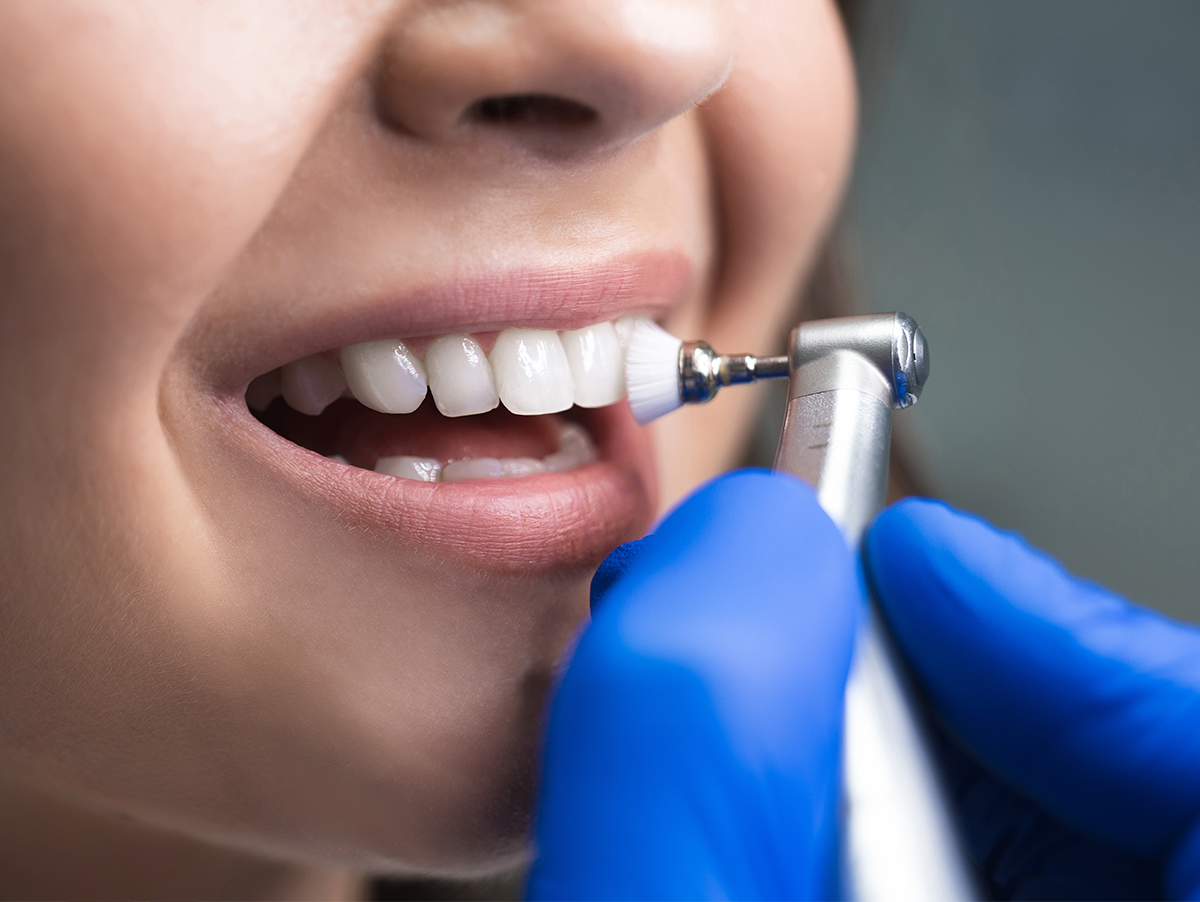
Teeth cleaning is the process of removing microplaque, bacterial plaque or other residues accumulated on the teeth due to eating or drinking liquids.
Teeth cleaning is planned and applied by the dentist to protect the health of the gums. It not only cleans the gums, but also relieves aesthetic concerns, it can also clean the stains caused by consuming too much colored food.
Why are Teeth Cleaned?
The acidic environment created by the food eaten in the mouth and the residues left on the teeth cause the formation of bacterial plaque. Brushing teeth is mainly used to clean these plaques, remove food residues from teeth and mouth, and neutralize the acidic pH in the mouth.
If tooth brushing and dental care is not done routinely, this causes bacteria to damage tooth enamel and form cavities. In addition, some bacterial plaques harden and form what is known as tartar on tooth enamel. Tartar is a very hard structure that cannot be removed with regular brushing and dental care, so it requires teeth cleaning by the dentist.
Some reasons such as heavy consumption of products such as cigarettes, tea or coffee can also lead to discoloration of the teeth that cannot be removed by brushing. To eliminate all these problems, dental cleaning performed by an experienced dentist in a safe clinical environment may be sufficient. The dentist should be consulted about how to treat the problems in the tooth or whether the teeth need to be cleaned and an examination should be made.
How Teeth Cleaning Is Done?
Theth cleaning procedure is performed by the dentist. Before this, a detailed control is made in the patient's mouth. If a problem is discovered after the examination, this treatment can be planned or if possible, teeth cleaning can be performed on the same day.
Teeth cleaning involves removing tartar and plaque from the tooth surface with various instruments. These tools do not damage the enamel, they are only effective in removing plaque and tartar covering the surface. After the procedure, the outer surface of the tooth becomes clean and smooth.
If the dentist deems it necessary, besides plaque and tartar removal, whitening and polishing applications can be used on colored teeth. Clean teeth are very important to prevent problems such as gingivitis, which can lead to gum recession and tooth loss.
Teeth Cleaning Application
Even if the patients perform oral and dental care routinely, they may see tartar again in a few years due to some minerals in foods and saliva. Therefore, the teeth cleaning process should be considered as a standard oral health procedure that everyone should actually have every few years.
Different tools and medicines may be preferred by dentists in the teeth cleaning procedure. Often the process is started with the help of ultrasonic instruments. These devices can crack the tartar by emitting vibration. After this step, which allows the separation of large scaler from the teeth, water is sprayed into the patient's mouth to clean the separated layers.
Small tartars are cleaned with special tools. This process continues until all tartar formed in the folds and spaces of the tooth is removed. Before the complete removal of tartar and the end of the teeth cleaning, a fluoride toothpaste is also applied. This is usually completed in as little as 15 minutes. However, it is possible to see that the more tartars, the longer the process can take.
How to Clean Gum Inflammation?
Gingivitis can occur when oral care and regular dental cleaning are neglected. It is usually recognized by symptoms such as gum redness, sensitivity to hot and cold, pain when eating, and white inflammation of the gums.
Eating hard foods, careless brushing, or injury from deficiencies in various vitamins and minerals can often cause mild inflammation. This condition can usually be improved within a few days by taking precautions such as using medicines and mouthwashes recommended by the dentist, oral and dental care, and consuming soft foods.
However, more advanced gingivitis definitely requires treatment, especially if it tends to recur. Ongoing severe gingivitis can cause the patient to lose a tooth. The main cause of this illness is the formation of plaque and tartar on the teeth. For this reason, it is very important to do oral and dental care routinely and correctly, not to interrupt dental examinations, and to apply teeth cleaning in the periods recommended by the dentist.