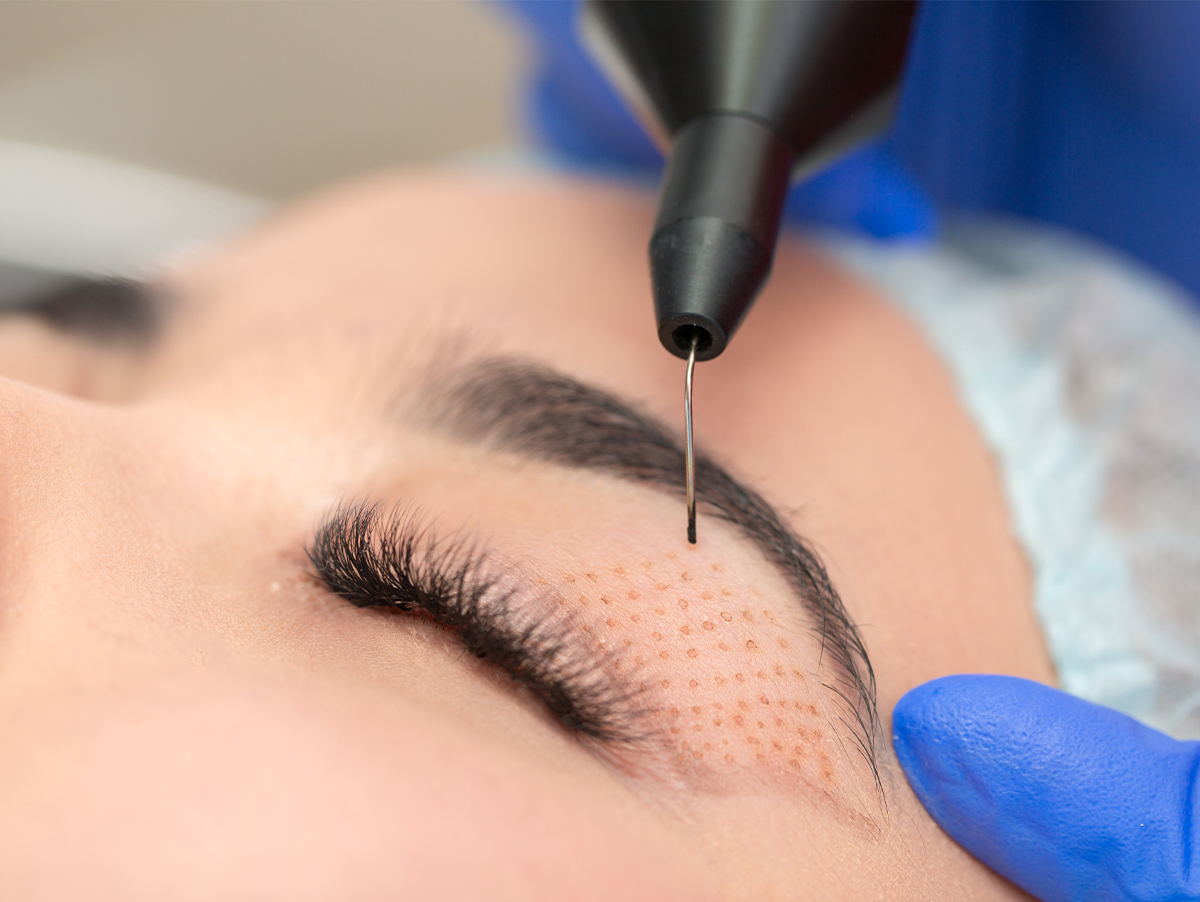
What is Plasma Lifting?
Plasma lifting is a cosmetic procedure involving plasma to tighten and lift the skin on the face, abdomen, and neck. It is also known as "plasma pen" or "fibroblasting".
The procedure involves using a plasma-generating device to create a small electric arc or plasma discharge between the device's tip and the skin. The plasma discharge causes the skin to contract and tighten, creating a lifting effect. The procedure is usually performed on the face and neck, but it is also used on other parts of the body. The eyes and abdomen are examples of these areas.
Plasma lifting is usually performed by a trained and licensed aesthetician or dermatologist. The procedure typically takes 30 to 90 minutes and can be performed with or without local anesthetic. Some people may experience mild swelling, redness, and tenderness after the procedure, which usually subsides within a few days.
Plasma lifting is not a permanent solution for sagging skin; the effects may only last for a few months to a year. The procedure is not suitable for everyone and it is extremely important to consult a healthcare professional before considering the procedure.
Which Parts of the Body is the Plasma Lifting Procedure Performed to?
Plasma lifting, a cosmetic procedure, can be performed in areas of sagging or loose skin.
- Forehead: Plasma lifting can be performed to tighten the skin on the forehead and smooth wrinkles.
- Eyelids: Plasma lifting can be preferred to tighten the skin on the upper and lower eyelids or to improve the appearance of sagging eyelids.
- Abdomen: The procedure can be performed to provide improvement and dynamic appearance in the abdominal area where stretch mark formation is frequently observed.
- Cheeks: Preferred by many individuals, plasma lifting can be used to lift and tighten the skin on the cheeks, resulting in a more youthful and dynamic appearance.
- Neck: Plasma lifting can be used to tighten and lift the skin on the neck, reducing the appearance of sagging or loose skin.
- Hands: The procedure can be used to tighten the skin texture on the hands, improving wrinkles and the blemished appearance caused by aging.
How is Plasma Lifting Treatment Performed?
Plasma lifting treatment is typically performed in a dermatologist's office or a medical spa. Before the procedure, the skin is cleansed and a numbing cream may be applied to reduce possible complications. The treatment area may be marked with a pen to guide the placement of the plasma discharges.
During the procedure, the aesthetician or dermatologist holds the plasma lifting device against the skin and uses it to create a series of small plasma discharges. The discharges cause the skin to contract and tighten, creating a lifting effect. The procedure can be repeated more than once to achieve the desired result.
There may be minimal redness and swelling of the skin after the procedure, and the treated area may be covered with a dressing or ointment. The aesthetician or dermatologist can give instructions for the care of the treated area and may also prescribe medication to reduce any discomfort.
Post-treatment instructions should be followed carefully to complete the healing process most healthily and to minimize the risk of complications.
Plasma lifting treatment may not be suitable for everyone. Therefore, it is important to consult a healthcare professional before considering the procedure.
What Should Be Considered After Plasma Lifting Treatment?
After plasma lifting treatment, there are some points to be considered to ensure proper healing.
- It is important to keep the treated area clean and protect it from the sun. The aesthetician or dermatologist may recommend using a moisturizer and applying a broad-spectrum sunscreen with an SPF of 30 or higher.
- It is important to avoid activities that may cause excessive sweating or heat in the treated area, such as hot showers, and saunas, and exercise for at least 24 hours after the procedure.
- It is important to avoid using products that may irritate the treated area, such as exfoliating products, retinoids, and alpha hydroxy acids for at least one week after treatment.
- It is important to avoid taking blood thinners such as aspirin and non-steroidal anti-inflammatory drugs (NSAIDs) for at least one week before and after the procedure to reduce the risk of bleeding and bruising.
- It is important to follow post-treatment instructions carefully and contact the aesthetician or dermatologist if any unusual symptoms or concerns arise.