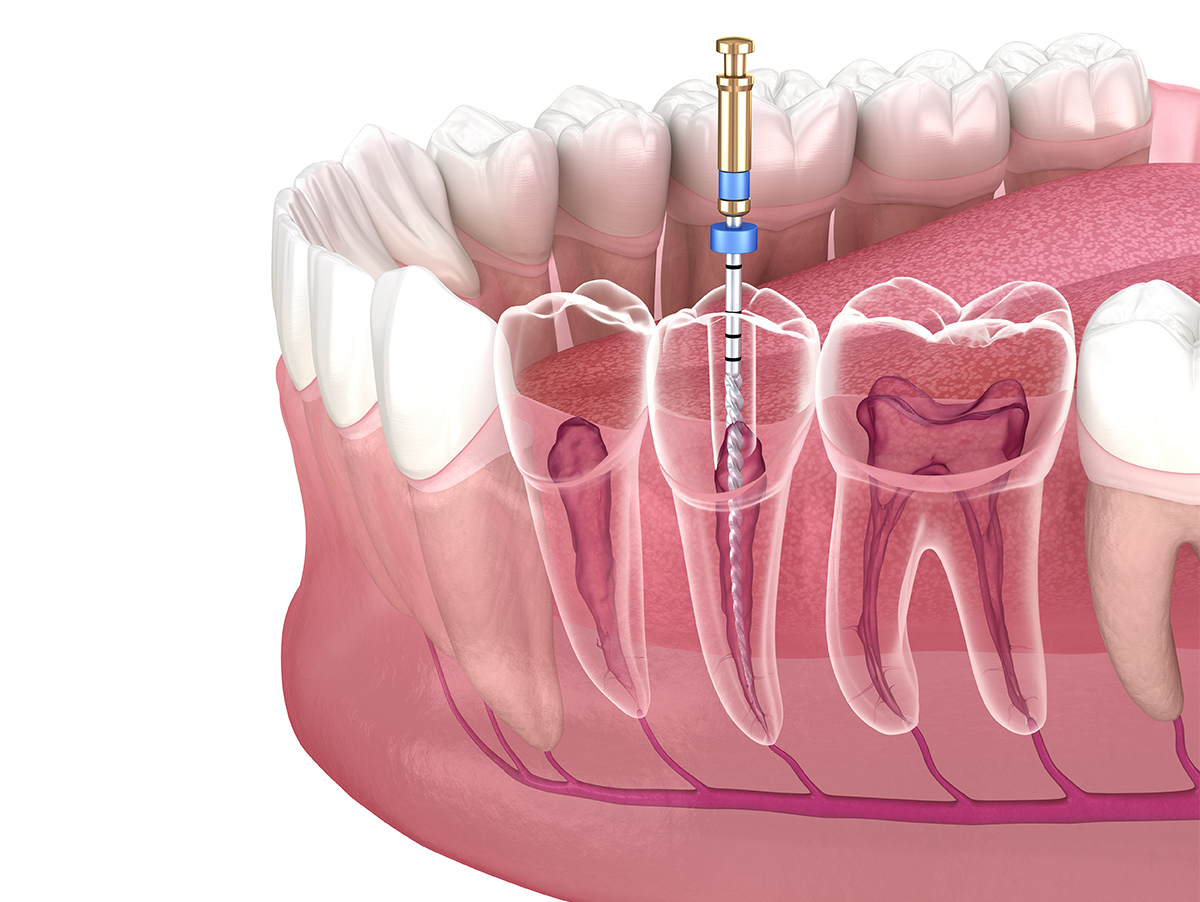
Root canal therapy, also known as endodontic treatment in medical language, is a form of operation performed to restore a decayed or infected tooth.
However, it is not possible to apply root canal treatment for every tooth decay. Filling can be used if there is a slight tooth decay. If there is inflammation and an advanced degree of caries, endodontic treatment is preferred.
If dental caries is not treated on time, they may go deep inside the tooth and this causes the nerves to become inflamed. An inflamed tooth causes severe pain to the patient. Sensitivity to heat/cold and darkening occur.
The hard layer that forms the outer part of the teeth is enamel. In the inner part, there are vessels and nerves together with the tooth root. The part called pulp is located in the center of the tooth and is the place that keeps it alive. With root canal therapy, the dentist removes the pulp and nerves in the root canal, which is inside the tooth enamel. The dentist then clears the area and re-fills the opened space. The extracted tooth nerve is of no great value for the function of the tooth, but in this way, the patient is prevented from feeling pain.
Pain is not felt during root canal treatment because the tooth and its surroundings are effectively anesthetized before the operation. Today, with the developing technology, this treatment is performed in a short time and easily.
Why is Root Canal Treatment Done?
Deep tooth decay, fractured tooth or cracking can lead to damage and infection to the pulp or enamel. Damage to the pulp allows bacteria to grow in the root canal.
A dental abscess can occur due to decaying debris or bacteria inside the root canal. A tooth that is infected up to the root tips can become inflamed, that is, abscess. Its only harm is not to the patients' teeth but also causes swelling in the face and neck area of them.
Abscessed tooth should be treated as soon as possible so that the patients can continue their life normally. Toothache often intensifies at night, and the quality of life of people suffering from this pain is greatly reduced.
Facts that indicate that a person should have root canal treatment are generally as follows:
- If the tooth color is dark,
- If the hot/cold tolerance has decreased,
- If the tooth hurts a lot while chewing,
- If swelling and tenderness have occurred in neighboring gums,
That patients must make an appointment with their dentist.
However, a poorly made restoration, new decayed teeth formed around past dental fillings, injury and infection of the dental nerve as a result of an accident are also very valid reasons for root canal treatment.
How is Root Canal Treatment Applied?
Root canal treatments are usually performed by an endodontist. This field of dentistry focuses on the causes, diagnosis and treatment of pulp and nerve specific diseases and damages.
The first step at the beginning of treatment is to perform radiological imaging. In this way, the root canals of the patients can be examined in detail and if there is an infection, the dentist reveales it. Local anesthesia is given to the patients so that they don't feel anything during the procedure. In some people, anesthesia may not be needed because the nerve inside the tooth is already dead.
During root canal therapy, the operation site should remain dry, so a rubber dam is placed around the tooth. The dentist then digs a slot to access the root canal, from which it removes bacteria and dental nerve remnants. This process continues for a while with the help of special rasps until the root canal is thoroughly cleaned. Finally, the dentist closes this slot.
Things to Consider After a Root Canal Treatment
Some conditions that patients should pay attention in healing period after treatment:
- It is necessary to avoid chewing hard foods until the root canal treatment is completed,
- Following daily dental cleaning without interruption is a must. Considering the sensitivity of the teeth, brushing slowly and circularly at least 2 times a day is important for oral health,
- Dental floss should be used at least once a day to prevent infection after root canal treatment. Flossing is a necessity, as is using a toothbrush. While using dental floss, it is necessary to follow the recommendations of the dentist regarding the structure of the mouth and teeth,
- It is recommended to stay away from sticky or sweet foods for a while after the treatment. Sugar is one of the main causes of tooth decay. Sugar consumption should be limited for oral health as well as general body health. It should not be forgotten that it is not only found in products like chocolate and waffles, but also in many beverages and ready-made products.