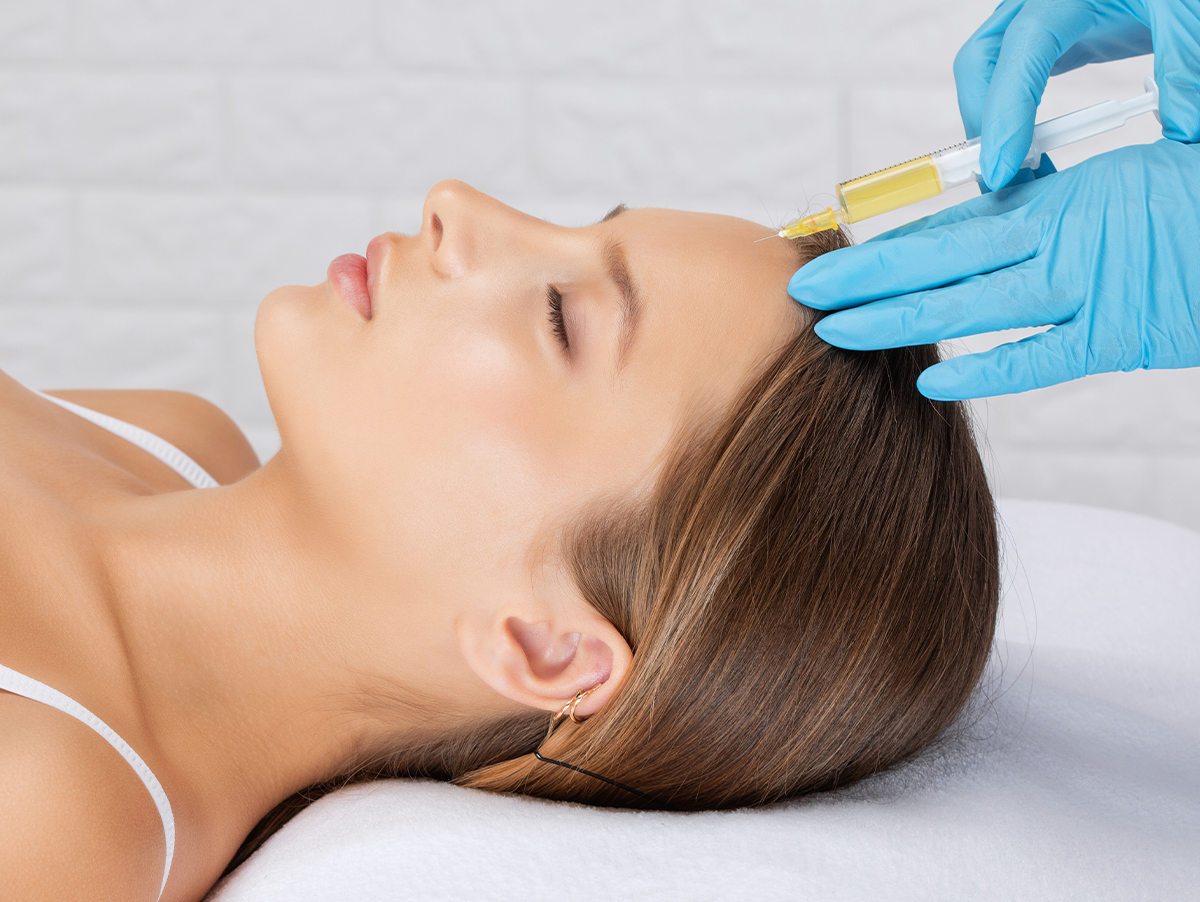
What is a Hair PRP Procedure?
Hair PRP application is a treatment method also known as Platelet-rich plasma (PRP) therapy. PRP is defined as a liquid inside the plasma, which is obtained from the blood in the body and has a high amount of platelets. Platelets are cells that play a role during blood clotting and play an important role during tissue repair in the body.
PRP treatment can be preferred to reduce hair loss and hair loss. This method allows the hair follicles to be better nourished and repaired thanks to the PRP fluid injected deep into the scalp. In this way, hair loss is reduced and hair becomes healthier and stronger.
How is Hair PRP Treatment Performed?
Hair PRP treatment proceeds in stages. Firstly, the doctor draws a few milliliters of blood using an injector. This blood is a source from which PRP fluid will be obtained.
The blood sample is cycled in a centrifuge machine. This machine separates the platelets and plasma from the blood. Thus, PRP fluid is obtained. The PRP fluid is injected deep into the scalp with a very fine needle. This procedure is usually accompanied by a deep massage to reach the deep layers of the scalp. The effect of the injected PRP fluid can be seen within a few weeks. To complete the treatment, sessions with one or two-week intervals are required. In this way, the hair can become healthier and stronger.
The PRP method is usually performed by doctors and may require several sessions. In addition to those with hair loss, it can be preferred for every individual who wants to make their hair stronger and healthier. However, PRP therapy may not be a suitable treatment for everyone and it is not correct to apply it except for the doctor's advice.
Who is a Good Candidate for Hair PRP Treatment?
Before the PRP procedure, a physical examination of the individual should be performed and both hair and scalp should be analyzed. If any problem that may prevent PRP treatment is encountered, the existing condition that prevents treatment should be eliminated.
PRP treatment may not be suitable for individuals with blood clotting disorders because this treatment, which involves injecting a substance into the skin, may cause the risk of bleeding or bruising. Therefore, it is extremely necessary and important to undergo a comprehensive examination before treatment.
For PRP treatment to be effective, a certain amount of platelets must be present in the blood. If the platelet count is low, PRP treatment may not be appropriate. Individuals who have received blood transfusions in the past may not be suitable for PRP treatment because the treatment interferes with the blood transfusion.
PRP treatment may not be a good option for individuals who have had a serious infection or extensive surgery in the past. Medical history that is likely to interfere with the healing process may not allow the treatment to be effective. Individuals who have suffered serious trauma in the past may also not be suitable for PRP treatment.
It is recommended to consult a physician before considering PRP treatment to determine whether the treatment is appropriate. The healthcare professional can help to understand the potential risks and benefits of the treatment and can suggest alternative treatment options if necessary.
What Should Be Considered After Hair PRP?
The healing process after hair PRP treatment may vary from person to person. Generally, the effect of the injected PRP fluid is seen within a few weeks. However, several sessions may be required for the treatment process to be completely finalized.
After the hair PRP treatment, there may be mild itching, tenderness, or pain on the scalp. This is a temporary condition and generally loses its effect within a few days. After the treatment, it is recommended to pay attention to washing and combing the hair. In addition, the use of moisturizer may be preferred to reduce the itching that may occur in the scalp area.
After hair PRP, it is extremely important to pay attention to the doctor's recommendations. In this way, the healing process can progress faster and healthier. Painkillers can be used to relieve the minimal pain that may occur during the healing process in a short time, but it is not recommended to use medication other than the doctor's advice.
What are the Advantages of the Hair PRP Procedure?
After PRP treatment, complications such as minimal itching, pain, redness, and swelling may occur on the scalp. However, these side effects usually disappear within a few days. Hair PRP application is defined as a liquid obtained from the body. Therefore, this method has fewer side effects than other natural methods.
The hair PRP procedure is performed by doctors and usually requires several sessions. This method does not require anesthesia and takes less time compared to many hair treatments. PRP therapy is seen as a suitable option to reduce hair loss or to allow the hair to become healthier and stronger. However, this therapy may not be suitable for everyone and it is recommended not to be performed except on the advice of a doctor.